RV Generators: Reliable Power on the Road
Understanding RV Generator Basics for Boondocking and Camping
So, you're thinking about hitting the open road in your RV? Awesome! But let's talk about something crucial for a comfortable and independent journey: RV generators. They're not just noisy boxes; they're your lifeline to power when you're off the grid, boondocking in the desert, or simply need to run your AC on a hot summer day. Let's break down the basics.
What is an RV Generator and Why Do You Need One
Simply put, an RV generator is a portable power plant. It converts fuel (usually gasoline, propane, or diesel) into electricity. This electricity then powers your RV's appliances, lights, air conditioning, and other electronic devices when you're not connected to shore power (electricity from a campground or other source). Why do you need one? Well, imagine being miles from civilization, wanting to watch a movie, or needing to keep your food cold. Without a generator, you're relying solely on your RV's batteries, which can quickly drain.
Types of RV Generators: Portable vs. Onboard
There are two main types of RV generators: portable and onboard (or built-in). Portable generators are standalone units that you can move around and store when not in use. They're generally less expensive and easier to maintain. Onboard generators are permanently installed in your RV, usually in a compartment. They're more convenient but also more expensive and require professional installation.
Fuel Options: Gasoline, Propane, and Diesel RV Generators
The fuel your generator uses impacts its performance, cost, and convenience. Gasoline generators are common and relatively inexpensive, but gasoline can be volatile and requires careful storage. Propane generators burn cleaner than gasoline and propane tanks are often already integrated into RV systems. Diesel generators are typically found in larger RVs and offer excellent fuel efficiency and longevity.
Choosing the Right RV Generator: Power Needs and Considerations
Picking the perfect RV generator isn’t as simple as grabbing the first one you see. It's about matching the generator's output to your RV's power demands. Overestimating is better than underestimating, but you don't want to waste money on unnecessary capacity. Let's figure out what you really need.
Calculating Your RV Power Needs: Wattage Requirements
The key to choosing the right generator is understanding your RV's power consumption. Each appliance and device in your RV requires a certain amount of power, measured in watts. To calculate your total wattage needs, make a list of all the appliances you might use simultaneously and add up their wattage ratings. Look for wattage information on the appliance itself or in its user manual. Remember to account for starting wattage, which is the extra power some appliances (like air conditioners) need when they first turn on.
Generator Size and Capacity: Matching Output to Demand
Once you know your total wattage needs, you can choose a generator with sufficient output. It's generally recommended to choose a generator with a slightly higher wattage rating than your calculated needs to provide a buffer. This prevents the generator from being overloaded and ensures reliable power.
Noise Levels: Finding a Quiet RV Generator Solution
RV generators can be noisy, which can be a nuisance for you and your fellow campers. Look for generators with low noise ratings (measured in decibels, dB). Inverter generators are generally quieter than traditional generators. Features like noise-dampening enclosures and mufflers can also help reduce noise levels.
RV Generator Price Range and Budget Considerations
RV generator prices vary widely depending on size, type, and features. Portable generators typically range from a few hundred dollars to several thousand dollars. Onboard generators are generally more expensive, with prices starting around $2,000 and going up from there. Consider your budget and prioritize the features that are most important to you. Don't forget to factor in the cost of fuel, maintenance, and accessories.
Top RV Generator Recommendations: A Product Comparison
Alright, let's get down to brass tacks. Here are some top-rated RV generators, covering different needs and budgets. We'll look at portable and onboard options, gasoline, propane, and diesel models, and generators known for their quiet operation.
Portable Gasoline RV Generator Recommendation: Champion 3400-Watt Dual Fuel Inverter Generator
The Champion 3400-Watt Dual Fuel Inverter Generator is a popular choice for RVers due to its versatility, portability, and quiet operation. It can run on either gasoline or propane, giving you flexibility in fuel options. It produces 3400 starting watts and 3100 running watts on gasoline, and 3060 starting watts and 2790 running watts on propane. The inverter technology provides clean, stable power, making it safe for sensitive electronics. It’s also relatively quiet, operating at 59 dBA from 23 feet. **Price:** Around $800 - $1000.
Champion 3400-Watt Dual Fuel Inverter Generator Use Cases
This generator is ideal for powering smaller RVs or for running essential appliances like air conditioning, lights, and a refrigerator. It's also great for tailgating, camping, and other outdoor activities. The dual-fuel capability is a major advantage, allowing you to choose the most convenient fuel source. Its portability makes it easy to move and store.
Champion 3400-Watt Dual Fuel Inverter Generator Pros and Cons
**Pros:** Dual fuel capability, quiet operation, clean power, portable, relatively affordable.
**Cons:** May not be powerful enough for larger RVs with high power demands, requires manual starting.
Portable Propane RV Generator Recommendation: Westinghouse iGen4500DF Dual Fuel Inverter Generator
The Westinghouse iGen4500DF Dual Fuel Inverter Generator is another excellent option for RVers who prefer propane. It boasts 4500 peak watts and 3700 running watts on gasoline, and 3600 peak watts and 3300 running watts on propane. It features remote start, making it easy to turn on and off from inside your RV. It's also relatively quiet, operating at 52 dBA. Like the Champion, it produces clean power suitable for sensitive electronics. **Price:** Approximately $900 - $1100.
Westinghouse iGen4500DF Dual Fuel Inverter Generator Use Cases
Similar to the Champion, this generator is well-suited for smaller to mid-sized RVs. The remote start feature is a significant convenience, especially during inclement weather. The propane option is ideal for RVers who already use propane for other appliances and want to avoid carrying gasoline. It's also a good choice for those concerned about gasoline fumes.
Westinghouse iGen4500DF Dual Fuel Inverter Generator Pros and Cons
**Pros:** Dual fuel capability, remote start, very quiet operation, clean power, portable.
**Cons:** Can be slightly more expensive than the Champion, propane power output is lower than gasoline.
Onboard Gasoline RV Generator Recommendation: Cummins Onan QG 4000 Gasoline Generator
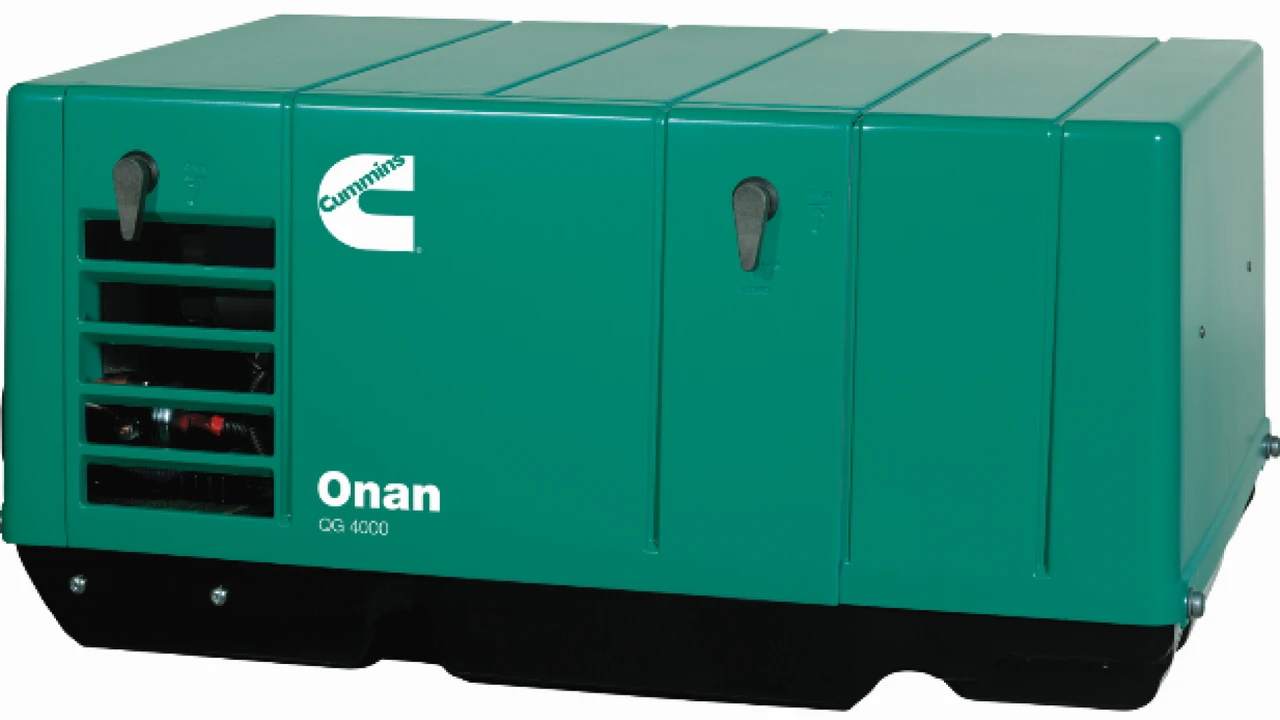
For those who prefer the convenience of an onboard generator, the Cummins Onan QG 4000 Gasoline Generator is a reliable choice. It's designed specifically for RVs and provides 4000 watts of continuous power. It's known for its durability and long lifespan. It's also relatively quiet for an onboard generator. It features an automatic voltage regulator to protect your appliances from power surges. **Price:** Typically ranges from $2500 - $3500 (including installation).
Cummins Onan QG 4000 Gasoline Generator Use Cases
This generator is ideal for mid-sized to larger RVs that require a reliable and convenient power source. It's perfect for running air conditioning, appliances, and electronics simultaneously. The onboard design eliminates the need for manual setup and storage. It's a great choice for RVers who frequently boondock or camp in areas without shore power.
Cummins Onan QG 4000 Gasoline Generator Pros and Cons
**Pros:** Convenient onboard design, reliable power, durable, relatively quiet for an onboard generator.
**Cons:** More expensive than portable generators, requires professional installation, gasoline fuel only.
Onboard Diesel RV Generator Recommendation: Generac PowerPact 75D Diesel Generator
For larger RVs that already use diesel fuel, the Generac PowerPact 75D Diesel Generator is a powerful and efficient option. It provides 7500 watts of continuous power and is designed for long-lasting performance. Diesel generators are known for their fuel efficiency and longevity. This model features a sound-dampening enclosure to minimize noise. **Price:** Generally between $4000 - $6000 (including installation).
Generac PowerPact 75D Diesel Generator Use Cases
This generator is perfect for large RVs with high power demands, such as those with multiple air conditioners or a full suite of appliances. The diesel fuel is often more readily available for diesel RVs. The onboard design provides convenience and eliminates the need for manual setup. It's a great choice for full-time RVers or those who frequently travel long distances.
Generac PowerPact 75D Diesel Generator Pros and Cons
**Pros:** Powerful, fuel-efficient, durable, convenient onboard design.
**Cons:** Most expensive option, requires professional installation, diesel fuel only, can be louder than gasoline or propane generators.
RV Generator Maintenance Tips: Extending the Life of Your Power Source
Investing in an RV generator is a significant expense, so it's crucial to maintain it properly to ensure its longevity and reliability. Regular maintenance can prevent costly repairs and keep your generator running smoothly for years to come. Here are some essential maintenance tips.
Regular Oil Changes: Keeping the Engine Running Smoothly
Just like your car, your RV generator needs regular oil changes. The frequency of oil changes depends on the generator's usage and the manufacturer's recommendations. Consult your owner's manual for specific instructions. Using the correct type of oil is also crucial. Generally, synthetic oil is recommended for its superior performance and protection.
Air Filter Cleaning and Replacement: Ensuring Proper Airflow
The air filter prevents dirt and debris from entering the engine. A dirty air filter can restrict airflow, reducing performance and potentially damaging the engine. Clean the air filter regularly, and replace it when it becomes excessively dirty or damaged. Again, refer to your owner's manual for specific instructions.
Spark Plug Maintenance: Optimizing Combustion
The spark plug ignites the fuel-air mixture in the engine. A faulty spark plug can cause starting problems, reduced performance, and increased fuel consumption. Inspect the spark plug regularly and replace it if it's worn or damaged. Use the correct type of spark plug recommended by the manufacturer.
Fuel Stabilizer: Preventing Fuel Deterioration
If you're not using your generator regularly, the fuel in the tank can deteriorate and become stale. This can cause starting problems and damage the fuel system. Add a fuel stabilizer to the fuel tank to prevent fuel deterioration. Follow the instructions on the fuel stabilizer bottle.
Regular Exercise: Preventing Stale Fuel and Component Seizure
Even if you're not using your generator regularly, it's important to run it for a short period (e.g., 30 minutes) every month or two. This helps prevent the fuel from becoming stale and keeps the engine components lubricated. It also ensures that the generator is ready to go when you need it.
Proper Storage: Protecting Your Generator from the Elements
When storing your generator, protect it from the elements. Cover it with a tarp or store it in a shed or garage. This prevents rust and corrosion and protects it from damage. Before storing the generator for an extended period, drain the fuel tank or add a fuel stabilizer.
RV Generator Safety Tips: Operating Your Generator Responsibly
RV generators can be dangerous if not operated properly. Carbon monoxide poisoning is a serious risk, and electrical hazards can also occur. It's crucial to follow safety guidelines to protect yourself and others. Here are some essential safety tips.
Carbon Monoxide Awareness: Preventing Deadly Poisoning
Carbon monoxide (CO) is a colorless, odorless gas that is produced by the incomplete combustion of fuel. It's extremely dangerous and can be deadly. Never operate your generator in an enclosed space, such as inside your RV or garage. Always operate it in a well-ventilated area, away from windows and doors. Install a carbon monoxide detector in your RV and check it regularly to ensure it's working properly.
Proper Ventilation: Ensuring Adequate Airflow
Adequate ventilation is crucial for preventing carbon monoxide poisoning. Make sure the generator is positioned so that the exhaust fumes are directed away from your RV and other occupied areas. Never block the generator's exhaust vents.
Electrical Safety: Preventing Shocks and Fires
Generators produce electricity, so it's important to take precautions to prevent electrical shocks and fires. Never operate the generator in wet conditions. Use a ground fault circuit interrupter (GFCI) outlet to protect against electrical shocks. Inspect the generator's cords and plugs regularly for damage and replace them if necessary.
Fuel Handling Safety: Preventing Spills and Fires
Gasoline and propane are flammable, so it's important to handle them safely. Never refuel the generator while it's running or hot. Allow the generator to cool down before refueling. Store fuel in approved containers, away from heat and flames. Clean up any fuel spills immediately.
Proper Grounding: Protecting Against Electrical Surges
Grounding your generator can help protect against electrical surges and prevent damage to your appliances. Consult your owner's manual for instructions on how to properly ground your generator.
RV Generator Alternatives: Exploring Other Power Options
While RV generators are a common power source, there are other alternatives to consider, especially if you're looking for a quieter, more environmentally friendly option. Here are some alternatives to RV generators.
Solar Power Systems: Harnessing the Sun's Energy
Solar power systems use solar panels to convert sunlight into electricity. They're a clean, renewable energy source that can significantly reduce your reliance on generators. Solar power systems can be expensive to install, but they can save you money in the long run by reducing your fuel costs. They're also much quieter than generators.
Battery Banks: Storing Energy for Later Use
Battery banks store electricity that can be used to power your RV's appliances and devices. They can be charged by solar panels, shore power, or a generator. Battery banks are a good option for RVers who want to reduce their reliance on generators and have a reliable source of power for short periods of time.
Inverters: Converting DC Power to AC Power
Inverters convert DC power (from batteries or solar panels) to AC power (which is used by most RV appliances). They're an essential component of any solar power or battery bank system. Choose an inverter that is appropriately sized for your power needs.
Shore Power Connections: Utilizing Campground Electricity
When available, shore power connections are the simplest and most convenient way to power your RV. Campgrounds typically offer shore power connections with varying amperage ratings (e.g., 30 amp, 50 amp). Make sure your RV's electrical system is compatible with the campground's shore power connection.
Troubleshooting Common RV Generator Problems: A Quick Guide
Even with regular maintenance, RV generators can sometimes experience problems. Here are some common problems and troubleshooting tips.
Generator Won't Start: Diagnosing the Issue
If your generator won't start, check the following: Is there fuel in the tank? Is the fuel valve open? Is the spark plug clean and properly gapped? Is the battery charged (for generators with electric start)? If you've checked all of these and the generator still won't start, consult a qualified technician.
Generator Shuts Down Unexpectedly: Identifying the Cause
If your generator shuts down unexpectedly, check the following: Is the generator overloaded? Is the oil level low? Is the air filter clogged? Is the generator overheating? If you've checked all of these and the generator continues to shut down, consult a qualified technician.
Generator Produces Low Power: Addressing the Issue
If your generator is producing low power, check the following: Is the air filter clogged? Is the spark plug worn? Is the fuel filter clogged? Is the voltage regulator working properly? If you've checked all of these and the generator is still producing low power, consult a qualified technician.
Generator is Excessively Noisy: Finding a Solution
If your generator is excessively noisy, check the following: Is the muffler damaged? Are the engine mounts loose? Is there debris rattling around inside the generator? If you've checked all of these and the generator is still excessively noisy, consult a qualified technician.
Generator Emits Excessive Smoke: Determining the Problem
If your generator is emitting excessive smoke, check the following: Is the oil level too high? Is the air filter clogged? Is the engine overheating? Is there a problem with the fuel system? If you've checked all of these and the generator is still emitting excessive smoke, consult a qualified technician.
:max_bytes(150000):strip_icc()/277019-baked-pork-chops-with-cream-of-mushroom-soup-DDMFS-beauty-4x3-BG-7505-5762b731cf30447d9cbbbbbf387beafa.jpg)