RV Leveling Systems: Automatic and Easy Setup
Understanding RV Leveling The Foundation of Comfort and Stability
Let's face it, nobody enjoys a wobbly RV. Beyond the simple annoyance of a tilted coffee cup, improper leveling can lead to a host of problems. Appliances, especially refrigerators, can malfunction if they're not level. Doors and drawers might swing open or closed on their own. And more importantly, an unlevel RV can compromise the structural integrity of your rig over time.
RV leveling is the process of making sure your RV is perfectly horizontal (side-to-side) and longitudinal (front-to-back). This ensures that everything functions as it should and that you enjoy a comfortable and safe camping experience. In the old days, this meant a lot of manual labor, bubble levels, and frustration. Thankfully, technology has stepped in to make the process much easier.
The Evolution of RV Leveling From Manual to Automatic
Remember the days of lugging around wooden blocks and painstakingly adjusting them under your tires? Those were the "good old days," but let's be honest, they weren't always that good. Manual leveling required a keen eye, a lot of patience, and often, a helping hand. It was a trial-and-error process that could eat into your precious vacation time.
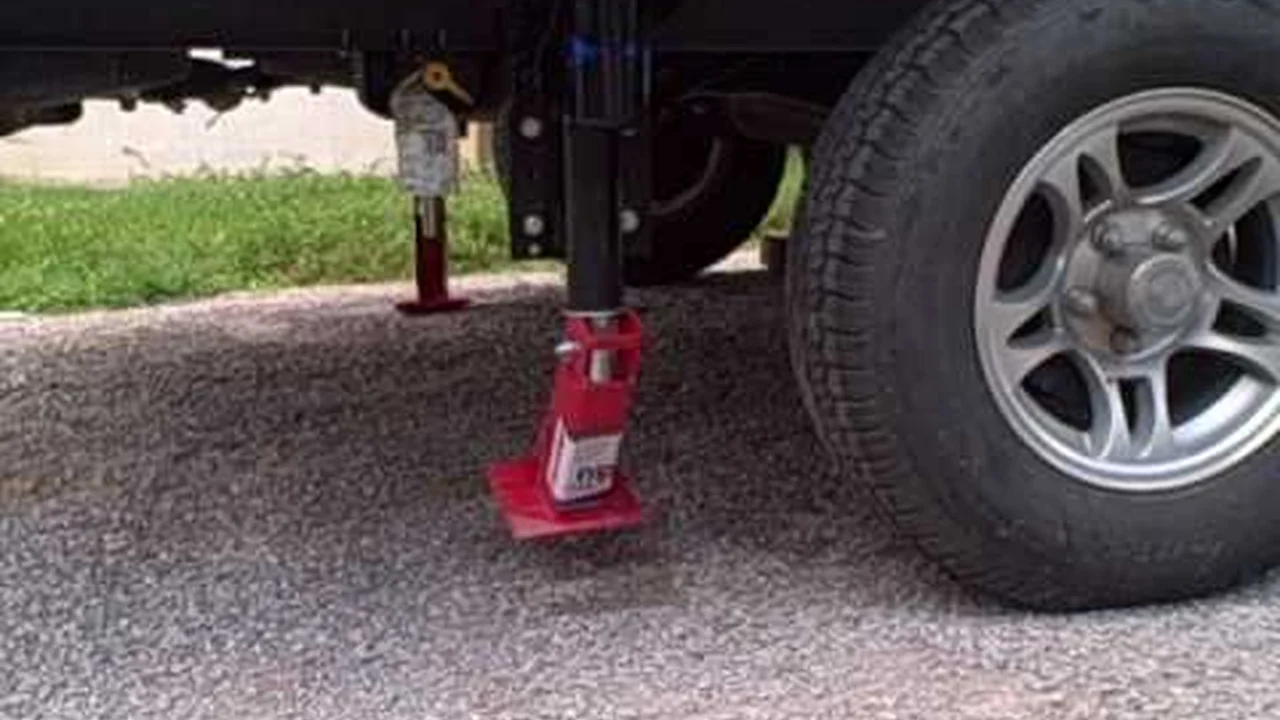
Then came the gradual improvements: leveling jacks, scissor jacks, and improved bubble levels. These made the process a bit easier and more precise, but still required manual operation and a good amount of physical effort. You still had to crawl around, check the levels, and adjust the jacks accordingly.
Now, we're in the era of automatic RV leveling systems. These systems use electronic sensors and hydraulic or electric jacks to automatically level your RV with the push of a button. They take the guesswork and the backache out of the equation, allowing you to set up camp in minutes, not hours.
Automatic RV Leveling Systems How They Work Their Advantages and Disadvantages
Automatic RV leveling systems are a game-changer for many RVers. They consist of several key components:
* **Control Panel:** The brains of the operation. This panel allows you to initiate the leveling process and monitor its progress. * **Electronic Sensors:** These sensors detect the RV's angle and communicate the information to the control panel. * **Hydraulic or Electric Jacks:** These jacks extend or retract to lift and level the RV. * **Hydraulic Pump (for Hydraulic Systems):** This pump provides the power to operate the hydraulic jacks.Here's how the process typically works:
1. You park your RV on your campsite. 2. You press the "auto-level" button on the control panel. 3. The system's sensors determine the RV's current angle. 4. The control panel instructs the hydraulic or electric jacks to extend or retract as needed to level the RV. 5. Once the RV is level, the system automatically stops.The advantages of automatic RV leveling systems are numerous:
* **Convenience:** Leveling your RV is as easy as pushing a button. * **Speed:** Automatic systems can level your RV in a matter of minutes. * **Precision:** These systems are incredibly accurate, ensuring your RV is perfectly level. * **Reduced Physical Strain:** No more crawling around and cranking jacks. * **Increased RV Lifespan:** Proper leveling helps prevent stress and strain on your RV's frame.However, there are also some potential disadvantages to consider:
* **Cost:** Automatic leveling systems can be a significant investment. * **Complexity:** These systems are more complex than manual leveling systems, which can make them more difficult to troubleshoot and repair. * **Power Consumption:** Hydraulic systems, in particular, can draw a significant amount of power. * **Weight:** These systems add weight to your RV, which can affect fuel economy. * **Potential for Malfunction:** Like any electronic system, automatic leveling systems can malfunction.Choosing the Right Automatic RV Leveling System Factors to Consider
With so many different automatic RV leveling systems on the market, choosing the right one can be overwhelming. Here are some key factors to consider:
* **Type of RV:** The type and size of your RV will determine the appropriate system. Smaller travel trailers may only need two jacks, while larger Class A motorhomes may require four or more. * **Weight Capacity:** Make sure the system you choose has a weight capacity that exceeds the GVWR (Gross Vehicle Weight Rating) of your RV. * **Hydraulic vs. Electric:** Hydraulic systems are generally more powerful and durable, but they are also more expensive and require more maintenance. Electric systems are less expensive and easier to install, but they may not be as powerful or reliable. * **Ease of Installation:** If you plan to install the system yourself, choose one that is relatively easy to install. * **Warranty:** Look for a system with a good warranty. * **Price:** Automatic leveling systems range in price from a few hundred dollars to several thousand dollars. Set a budget and stick to it. * **User Reviews:** Read online reviews to see what other RVers have to say about different systems.Top Automatic RV Leveling System Brands and Models A Deep Dive
Here are some of the top automatic RV leveling system brands and models on the market, along with their key features, pros, and cons:
Lippert Components Level Up
Lippert Components (formerly known as LCI) is a leading manufacturer of RV components, including automatic leveling systems. Their Level Up system is one of the most popular and widely used systems on the market.
* **Key Features:** Automatic leveling, one-touch operation, LCD control panel, automatic hitch height adjustment (on some models), smartphone app control (on some models). * **Pros:** Reliable, easy to use, widely available, good customer support. * **Cons:** Can be expensive, hydraulic system requires maintenance. * **Pricing:** Ranges from $2,500 to $6,000 depending on the model and RV type. * **Use Cases:** Suitable for a wide range of RVs, from travel trailers to Class A motorhomes. * **Product Comparison:** Lippert Level Up is often compared to Equalizer Systems. Lippert is generally considered to be slightly more user-friendly, while Equalizer Systems are known for their robust construction.Equalizer Systems Automatic Leveling
Equalizer Systems is another well-respected manufacturer of automatic RV leveling systems. Their systems are known for their durability and reliability.
* **Key Features:** Automatic leveling, one-touch operation, durable construction, heavy-duty jacks. * **Pros:** Very reliable, built to last, good for heavy RVs. * **Cons:** Can be more expensive than other systems, may require professional installation. * **Pricing:** Ranges from $3,000 to $7,000 depending on the model and RV type. * **Use Cases:** Ideal for larger and heavier RVs, such as Class A and Class C motorhomes. * **Product Comparison:** As mentioned above, Equalizer Systems are often compared to Lippert Level Up. Equalizer Systems are generally considered to be more robust, while Lippert is known for its user-friendly interface.Power Gear Leveling Systems
Power Gear is a brand that offers a range of leveling solutions, including both manual and automatic systems. They are known for providing cost-effective options.
* **Key Features:** Automatic leveling, electric or hydraulic options, relatively affordable. * **Pros:** More affordable than Lippert or Equalizer, decent performance. * **Cons:** May not be as durable as higher-end systems, customer support can be inconsistent. * **Pricing:** Ranges from $1,500 to $4,000 depending on the model and RV type. * **Use Cases:** Suitable for smaller to mid-sized RVs and those on a budget. * **Product Comparison:** Power Gear systems often compete with less expensive Lippert models. Power Gear is generally the more budget-friendly option, but Lippert offers a wider range of features and better overall quality.HWH Corporation Leveling Systems
HWH Corporation specializes in hydraulic leveling and slide-out systems for high-end RVs. Their systems are known for their precision and smooth operation.
* **Key Features:** Hydraulic leveling, precise control, smooth operation, often integrated with other RV systems. * **Pros:** High-quality, very precise, reliable. * **Cons:** Very expensive, typically requires professional installation, primarily for high-end RVs. * **Pricing:** Ranges from $5,000 to $10,000+ depending on the model and RV type. * **Use Cases:** Primarily used on luxury Class A motorhomes. * **Product Comparison:** HWH systems are in a different class than Lippert, Equalizer, or Power Gear. They are designed for high-end RVs and offer a level of performance and precision that is unmatched by other brands.Installation and Maintenance of Automatic RV Leveling Systems A Step-by-Step Guide
Installing an automatic RV leveling system can be a complex task, especially for hydraulic systems. If you're not comfortable working with electrical and hydraulic components, it's best to have the system professionally installed.
Here's a general overview of the installation process:
1. **Disconnect the Battery:** Always disconnect the RV's battery before starting any electrical work. 2. **Mount the Jacks:** The jacks need to be securely mounted to the RV's frame. This typically involves welding or bolting the jacks to the frame. 3. **Install the Hydraulic Pump (for Hydraulic Systems):** The hydraulic pump needs to be mounted in a safe and accessible location. 4. **Run Hydraulic Lines (for Hydraulic Systems):** The hydraulic lines need to be run from the pump to the jacks. Make sure to use high-quality hydraulic lines and fittings. 5. **Wire the Control Panel:** The control panel needs to be wired to the RV's electrical system. 6. **Test the System:** Once everything is installed, test the system to make sure it's working properly.Maintaining your automatic RV leveling system is crucial for ensuring its longevity and reliability. Here are some tips:
* **Regularly Inspect the Jacks:** Check the jacks for any signs of damage or wear. * **Lubricate the Jacks:** Lubricate the jacks regularly to keep them operating smoothly. Use a silicone-based lubricant. * **Check the Hydraulic Fluid Level (for Hydraulic Systems):** Check the hydraulic fluid level regularly and top it off as needed. * **Inspect the Hydraulic Lines (for Hydraulic Systems):** Inspect the hydraulic lines for any leaks or damage. * **Clean the System:** Clean the system regularly to remove any dirt or debris. * **Follow the Manufacturer's Recommendations:** Always follow the manufacturer's recommendations for maintenance and care.Troubleshooting Common Automatic RV Leveling System Problems
Even with proper maintenance, automatic RV leveling systems can sometimes experience problems. Here are some common issues and how to troubleshoot them:
* **System Not Leveling:** This could be due to a number of factors, such as a faulty sensor, a problem with the hydraulic pump, or a problem with the jacks. Check the sensors, hydraulic pump, and jacks for any signs of damage or malfunction. * **Jacks Not Extending or Retracting:** This could be due to a problem with the hydraulic pump, a problem with the jacks, or a blockage in the hydraulic lines. Check the hydraulic pump, jacks, and hydraulic lines for any problems. * **System Beeping or Displaying Error Codes:** Consult the system's manual to identify the meaning of the error code and follow the troubleshooting steps. * **Slow Leveling:** This could be due to low hydraulic fluid level (for hydraulic systems) or a weak hydraulic pump. Check the hydraulic fluid level and the condition of the hydraulic pump. * **Uneven Leveling:** This could be due to a faulty sensor or a problem with the jacks. Recalibrate the system and inspect the jacks.If you're unable to troubleshoot the problem yourself, contact a qualified RV technician.
Beyond Leveling Additional RV Gadgets for Enhanced Comfort and Convenience
While automatic leveling systems are a fantastic upgrade, there are other RV gadgets that can further enhance your camping experience:
* **RV Stabilizers:** These stabilizers help to reduce movement and wobble in your RV, making it more comfortable to walk around inside. * **Tire Pressure Monitoring System (TPMS):** A TPMS monitors the pressure and temperature of your tires, alerting you to any potential problems. * **RV Backup Camera:** A backup camera makes it easier and safer to back up your RV. * **RV Solar Panels:** Solar panels allow you to generate your own electricity, reducing your reliance on shore power. * **RV Surge Protector:** A surge protector protects your RV's electrical system from power surges. * **RV Water Filter:** A water filter ensures that you have clean and safe drinking water.The Future of RV Leveling Technology Innovations on the Horizon
RV technology is constantly evolving, and automatic leveling systems are no exception. Here are some potential future innovations:
* **Smarter Systems:** Leveling systems that can learn and adapt to different terrains and conditions. * **Integration with Smart Home Systems:** Leveling systems that can be controlled and monitored remotely via a smartphone or other smart device. * **Improved Sensors:** More accurate and reliable sensors. * **Lighter and More Efficient Systems:** Systems that are lighter and consume less power. * **Self-Diagnostic Capabilities:** Systems that can automatically diagnose and report problems.Investing in an Automatic RV Leveling System Is It Worth It
For many RVers, the convenience, speed, and precision of automatic RV leveling systems make them well worth the investment. They eliminate the hassle and frustration of manual leveling, allowing you to spend more time enjoying your camping trip. While the initial cost can be significant, the long-term benefits, such as increased RV lifespan and reduced physical strain, can outweigh the cost.
Ultimately, the decision of whether or not to invest in an automatic RV leveling system is a personal one. Consider your budget, your RV type, and your camping style. If you're tired of struggling with manual leveling and you're looking for a more convenient and comfortable camping experience, an automatic leveling system may be the perfect solution for you.
:max_bytes(150000):strip_icc()/277019-baked-pork-chops-with-cream-of-mushroom-soup-DDMFS-beauty-4x3-BG-7505-5762b731cf30447d9cbbbbbf387beafa.jpg)