RV Tire Pressure Monitoring Systems: Ensuring Safety
Understanding RV Tire Pressure Monitoring Systems TPMS
Let's dive into the world of RV Tire Pressure Monitoring Systems, or TPMS. What exactly are they, and why should you care? Well, if you're an RV enthusiast like me, you know that safety is paramount. And one of the most crucial aspects of RV safety is maintaining proper tire pressure. TPMS is your vigilant guardian, constantly monitoring your tire pressure and temperature, alerting you to potential problems before they become catastrophic. Think of it as a silent co-pilot, always watching out for your well-being on the road.
The Importance of Proper Tire Pressure for RVs
Why is proper tire pressure so vital for RVs? Unlike your everyday car, RVs are heavy vehicles that carry significant loads. Improper tire pressure can lead to a whole host of problems, including:
- Blowouts: Underinflated tires flex more, generating excessive heat. This heat can weaken the tire structure, leading to a sudden and dangerous blowout.
- Reduced Fuel Efficiency: Underinflated tires increase rolling resistance, forcing your engine to work harder and consume more fuel.
- Uneven Tire Wear: Improper inflation can cause uneven wear patterns, shortening the lifespan of your tires.
- Poor Handling: Incorrect tire pressure can negatively impact your RV's handling and stability, making it more difficult to control, especially in emergency situations.
In short, maintaining proper tire pressure is not just a suggestion; it's a necessity for safe and efficient RV travel. A TPMS helps you achieve this with ease and accuracy.
Types of RV Tire Pressure Monitoring Systems Available
Now that we understand the importance of TPMS, let's explore the different types available. There are primarily two main categories:
Internal TPMS Sensors
Internal TPMS sensors are installed inside the tire, replacing the valve stem. These sensors provide the most accurate and reliable readings because they directly measure the pressure and temperature inside the tire. However, installation requires professional assistance, as it involves removing the tire from the rim.
Pros:
- Highly accurate and reliable
- Less susceptible to theft or damage
Cons:
- Requires professional installation
- More expensive than external sensors
- Can be more difficult to replace the battery
External TPMS Sensors
External TPMS sensors screw onto the existing valve stem, making them much easier to install. These sensors are a more affordable and convenient option for many RV owners. However, they are more susceptible to theft or damage, and their readings may be slightly less accurate than internal sensors.
Pros:
- Easy to install and remove
- More affordable
Cons:
- Less accurate than internal sensors
- More susceptible to theft or damage
- Batteries may need more frequent replacement
Key Features to Consider When Choosing an RV TPMS
With so many TPMS options on the market, how do you choose the right one for your RV? Here are some key features to consider:
Pressure and Temperature Range
Ensure the TPMS you choose has a pressure and temperature range that is suitable for your RV's tires. Check your tire sidewall for the maximum pressure rating and choose a TPMS that can accurately monitor pressures up to that level.
Display Type and Readability
The display is your window into your tire health. Look for a display that is easy to read, even in bright sunlight. Consider the size of the display and the clarity of the information presented. Some displays offer real-time pressure and temperature readings for all tires simultaneously, while others require you to scroll through each tire individually.
Alert Types and Customization
A good TPMS will alert you to various issues, such as low pressure, high pressure, rapid pressure loss, and high temperature. Look for a system that allows you to customize the alert thresholds to match your specific tire requirements. A loud and clear audible alarm is also essential.
Sensor Battery Life
The battery life of the sensors is a crucial factor. Consider how often you plan to use your RV and choose a TPMS with a battery life that meets your needs. Some sensors have replaceable batteries, while others are sealed units that require replacement of the entire sensor when the battery dies.
Signal Range and Reliability
RVs can be quite long, so it's important to choose a TPMS with a strong signal range that can reliably transmit data from all sensors to the display unit. Look for systems that use robust wireless technology to minimize interference and ensure accurate readings.
Ease of Installation and Use
Unless you're comfortable with automotive work, choose a TPMS that is easy to install and use. External sensors are generally easier to install than internal sensors. Also, consider the user interface of the display unit. Is it intuitive and easy to navigate?
Top RV TPMS Products on the Market A Detailed Comparison
Now, let's take a look at some of the top RV TPMS products on the market and compare their features, pros, and cons.
EEZTire TPMS
The EEZTire TPMS is a popular choice among RV owners, known for its reliability and ease of use. It features external sensors that are easy to install and a clear, easy-to-read display. The system provides real-time pressure and temperature readings and alerts you to various issues, such as low pressure, high pressure, and rapid pressure loss.
Pros:
- Easy to install and use
- Reliable and accurate
- Clear, easy-to-read display
- Adjustable alarm thresholds
Cons:
- External sensors are susceptible to theft or damage
- Battery life could be better
Pricing: Approximately $300-$400, depending on the number of sensors.
Use Case: Ideal for RV owners who want a reliable and easy-to-use TPMS without the hassle of professional installation.
TireMinder TPMS
The TireMinder TPMS is another well-regarded option, offering a wide range of features and customization options. It features both internal and external sensor options, allowing you to choose the best fit for your needs. The system also includes a repeater, which helps to extend the signal range and ensure reliable data transmission.
Pros:
- Available with internal or external sensors
- Includes a repeater for extended signal range
- Highly customizable alert thresholds
- Comprehensive monitoring features
Cons:
- More expensive than some other options
- Can be more complex to set up
Pricing: Approximately $400-$600, depending on the number of sensors and the sensor type.
Use Case: Suitable for RV owners who want a high-performance TPMS with advanced features and customization options, especially those with longer RVs or trailers.
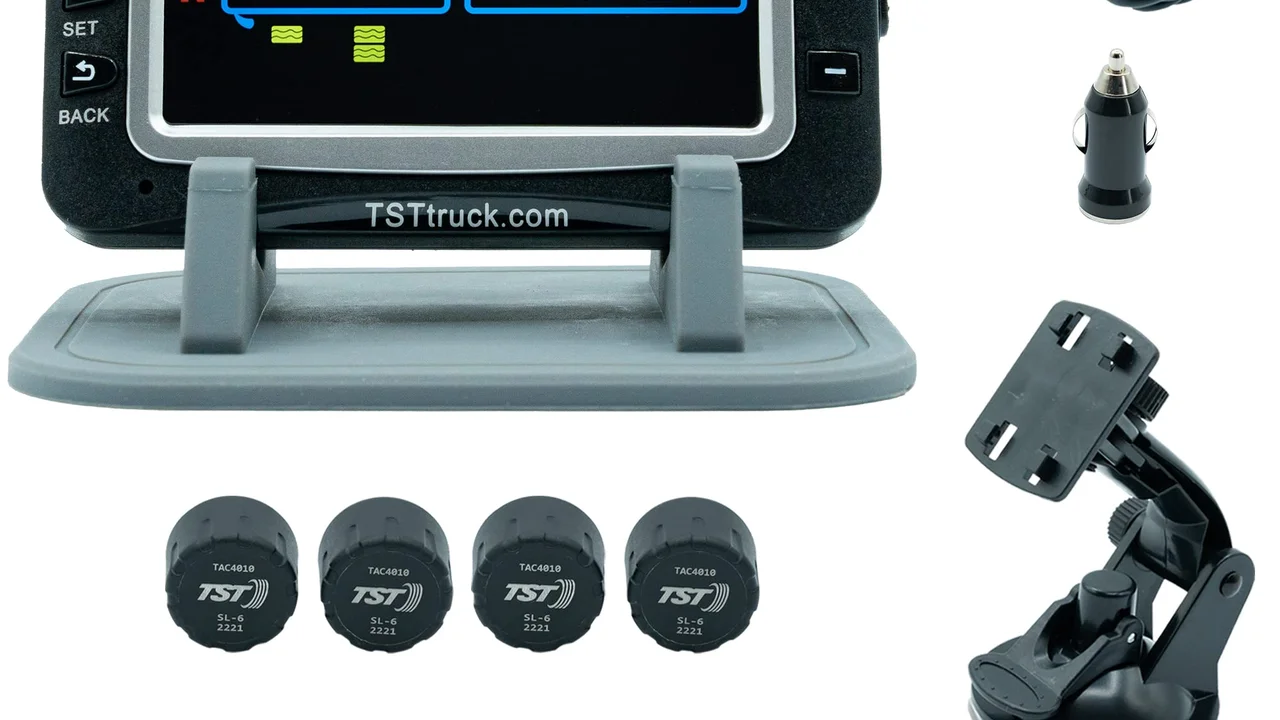
TST TPMS
The TST TPMS is known for its ruggedness and durability, making it a popular choice for off-road RVing and heavy-duty applications. It features external sensors that are designed to withstand harsh conditions and a robust display unit that is resistant to shock and vibration.
Pros:
- Rugged and durable design
- Designed for harsh conditions
- Reliable and accurate
- Easy to install and use
Cons:
- External sensors are susceptible to theft or damage
- Display may not be as visually appealing as some other options
Pricing: Approximately $350-$450, depending on the number of sensors.
Use Case: Ideal for RV owners who frequently travel off-road or in harsh conditions and need a TPMS that can withstand the rigors of their adventures.
Doran 360RV TPMS
The Doran 360RV TPMS is a cost-effective option that provides basic tire pressure monitoring functionality. It features external sensors and a simple display unit that shows real-time pressure readings. While it may not have all the bells and whistles of some other systems, it offers a reliable and affordable way to monitor your tire pressure.
Pros:
- Affordable
- Easy to install and use
- Reliable pressure monitoring
Cons:
- Limited features compared to other options
- External sensors are susceptible to theft or damage
- Display may not be as informative as some other options
Pricing: Approximately $200-$300, depending on the number of sensors.
Use Case: A good choice for RV owners who are on a budget and want a simple and reliable TPMS for basic tire pressure monitoring.
Detailed Product Information and Specifications
Let's delve deeper into the specifications of a few of these popular TPMS options.
EEZTire TPMS Detailed Specifications
- Sensor Type: External
- Pressure Range: 0-150 PSI
- Temperature Range: -4°F to 185°F
- Sensor Battery Life: Up to 2 years
- Display Type: LCD
- Alert Types: Low pressure, high pressure, rapid pressure loss, high temperature
- Signal Range: Up to 40 feet
- Warranty: 1 year
TireMinder TPMS Detailed Specifications
- Sensor Type: Internal or External (depending on the model)
- Pressure Range: 0-200 PSI
- Temperature Range: -40°F to 257°F
- Sensor Battery Life: Up to 10 years (internal), Up to 1 year (external)
- Display Type: LCD
- Alert Types: Low pressure, high pressure, rapid pressure loss, high temperature, sensor failure
- Signal Range: Up to 60 feet (with repeater)
- Warranty: 3 years
TST TPMS Detailed Specifications
- Sensor Type: External
- Pressure Range: 0-188 PSI
- Temperature Range: -40°F to 185°F
- Sensor Battery Life: Up to 1 year
- Display Type: LCD
- Alert Types: Low pressure, high pressure, rapid pressure loss, high temperature
- Signal Range: Up to 50 feet
- Warranty: 2 years
RV TPMS Use Cases Real-World Examples
To further illustrate the benefits of RV TPMS, let's look at some real-world use cases.
Preventing a Blowout on a Cross-Country Trip
Imagine you're on a cross-country RV trip, miles from the nearest town. Suddenly, your TPMS alerts you to a slow leak in one of your tires. You pull over, inspect the tire, and discover a nail embedded in the tread. Thanks to the TPMS, you caught the problem early, before it escalated into a dangerous blowout. You're able to change the tire and continue your journey safely.
Improving Fuel Efficiency on Long Drives
You're planning a long RV trip and want to maximize your fuel efficiency. Your TPMS helps you maintain the optimal tire pressure for your RV, reducing rolling resistance and improving your gas mileage. Over the course of the trip, you save a significant amount of money on fuel.
Detecting a Heat Buildup in a Tire
You're driving through the desert on a hot summer day. Your TPMS alerts you to a high temperature reading in one of your tires. You pull over and discover that the tire is overheating due to a brake issue. You're able to address the problem before it causes a blowout or damages your brakes.
Tips for Maintaining Your RV TPMS
To ensure your RV TPMS continues to function properly, here are some essential maintenance tips:
Regularly Check Sensor Batteries
The battery life of your TPMS sensors is finite. Regularly check the battery levels and replace them as needed. Some systems will alert you when the batteries are low.
Inspect Sensors for Damage
Periodically inspect your TPMS sensors for any signs of damage, such as cracks, leaks, or corrosion. Replace any damaged sensors immediately.
Calibrate Your TPMS
Some TPMS systems require calibration to ensure accurate readings. Follow the manufacturer's instructions for calibrating your system.
Keep Sensors Clean
Keep your TPMS sensors clean to prevent dirt, debris, and corrosion from interfering with their performance. Wipe them down with a clean cloth as needed.
Store Your TPMS Properly
When storing your RV for extended periods, remove the TPMS sensors and store them in a cool, dry place to prolong their battery life.
Addressing Common RV TPMS Problems
Even with proper maintenance, you may encounter some common RV TPMS problems. Here's how to troubleshoot them:
Sensor Not Reading
If a sensor is not reading, try the following:
- Check the sensor battery.
- Ensure the sensor is properly installed.
- Check for any obstructions that may be blocking the signal.
- Try re-pairing the sensor with the display unit.
False Alarms
If you're experiencing false alarms, try the following:
- Check your tire pressure with a manual gauge to verify the accuracy of the TPMS.
- Adjust the alert thresholds to match your specific tire requirements.
- Ensure the sensors are properly calibrated.
Signal Interference
If you're experiencing signal interference, try the following:
- Relocate the display unit to a different location in your RV.
- Use a repeater to extend the signal range.
- Ensure there are no other electronic devices interfering with the signal.
RV TPMS and Legal Considerations
While RV TPMS is not currently mandated by law in most jurisdictions, it is highly recommended for safety reasons. Some states may have specific regulations regarding tire safety, and a TPMS can help you comply with these regulations.
The Future of RV Tire Pressure Monitoring Systems
The future of RV TPMS is bright, with advancements in technology leading to more sophisticated and user-friendly systems. We can expect to see:
Integration with RV Smart Home Systems
TPMS will likely become integrated with RV smart home systems, allowing you to monitor your tire pressure and temperature from your smartphone or tablet.
Predictive Analytics
Advanced TPMS systems may use predictive analytics to anticipate potential tire problems before they occur, giving you even more time to react.
Improved Sensor Technology
Sensor technology will continue to improve, with smaller, more accurate, and more durable sensors.
The Ultimate Guide to Choosing the Right RV TPMS
Choosing the right RV TPMS is a crucial decision that can significantly impact your safety and peace of mind on the road. By understanding the different types of TPMS available, considering key features, and comparing top products, you can make an informed choice that meets your specific needs and budget. Remember to prioritize safety, reliability, and ease of use when selecting your RV TPMS.
RV Tire Safety Beyond TPMS
While a TPMS is an invaluable tool for ensuring tire safety, it's important to remember that it's just one piece of the puzzle. Regular tire inspections, proper tire maintenance, and adherence to weight limits are also essential for safe RV travel. Make sure to check your tires for wear and tear, maintain proper inflation, and avoid overloading your RV.
Final Thoughts on RV Tire Pressure Monitoring Systems
Investing in an RV Tire Pressure Monitoring System is an investment in your safety and the safety of those around you. It's a small price to pay for the peace of mind that comes with knowing your tires are properly inflated and you're protected from potential blowouts and other tire-related problems. So, take the time to research your options, choose the right TPMS for your RV, and enjoy your travels with confidence.
:max_bytes(150000):strip_icc()/277019-baked-pork-chops-with-cream-of-mushroom-soup-DDMFS-beauty-4x3-BG-7505-5762b731cf30447d9cbbbbbf387beafa.jpg)