RV Inverters: Converting DC to AC Power
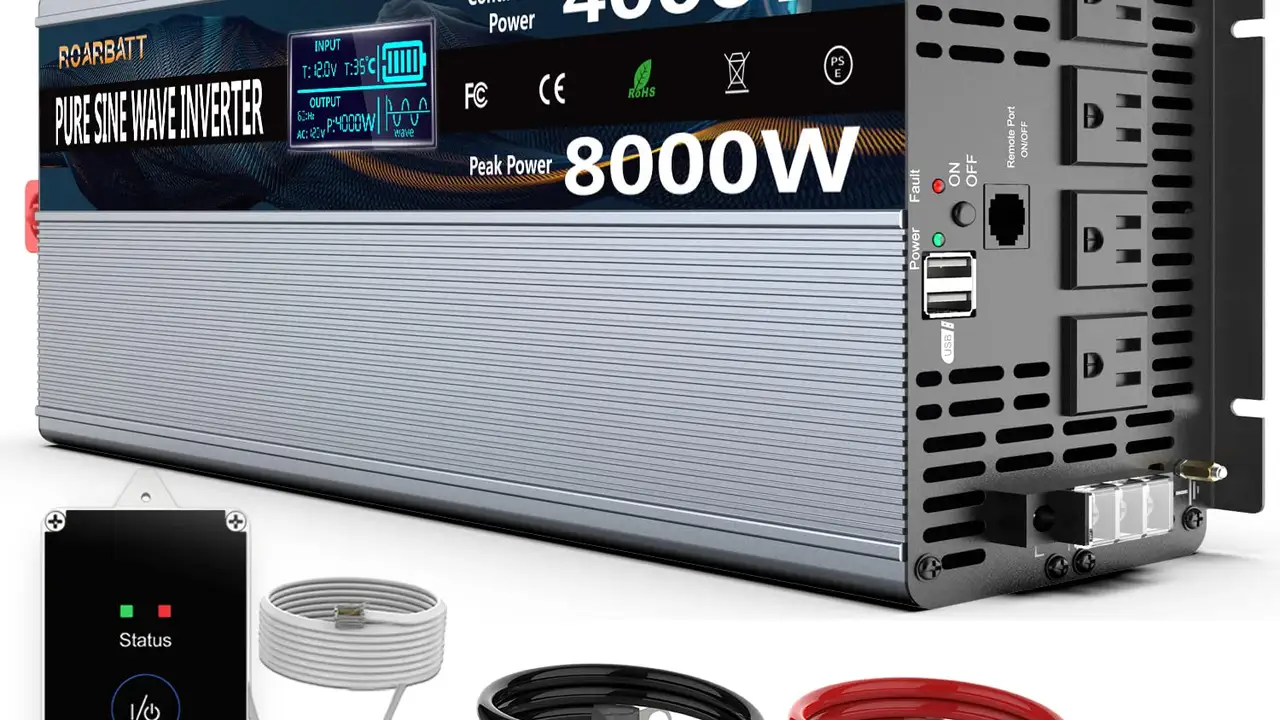
Understanding RV Inverters The Basics of DC to AC Conversion
So, you're hitting the open road in your RV, ready for adventure. But what about those creature comforts that rely on good old AC power? That's where RV inverters come in. Think of them as the unsung heroes of your mobile home, silently working to keep your devices charged, your coffee brewing, and your entertainment systems humming.
Essentially, an RV inverter takes the direct current (DC) power stored in your RV's batteries and converts it into alternating current (AC) power, the same kind you get from a standard wall outlet. This allows you to run appliances and electronics that require AC power, even when you're boondocking miles from the nearest electrical hookup.
But before you dive in, let's break down the fundamentals. DC power, like what's in your batteries, flows in one direction. AC power, on the other hand, alternates its direction many times per second. An inverter uses electronic circuits to switch the DC power on and off rapidly, creating an alternating current waveform that mimics AC power.
Why not just use a generator? Well, generators are noisy, require fuel, and produce emissions. Inverters, when paired with a good battery bank and potentially solar panels, offer a cleaner, quieter, and often more convenient solution for powering your RV's AC appliances.
Different Types of RV Inverters Choosing the Right One for Your Needs
Not all RV inverters are created equal. They come in different sizes, power ratings, and with varying levels of sophistication. Understanding the different types is crucial to selecting the right inverter for your specific needs.
Pure Sine Wave Inverters The Gold Standard for Sensitive Electronics
Pure sine wave inverters produce an AC waveform that is virtually identical to the power you get from the grid. This clean power is essential for sensitive electronics like laptops, TVs, and anything with a digital clock. These devices are designed to operate on a smooth sine wave, and using a modified sine wave inverter can potentially damage them or cause them to malfunction.
Think of it like this: a pure sine wave is a perfectly smooth road for your electronics, while a modified sine wave is a bumpy, pothole-filled road. While some devices might be able to handle the bumps, others will suffer for it. While they are more expensive, pure sine wave inverters are generally recommended for most RV setups, especially if you plan on using any sensitive electronics.
Example Product Recommendation Renogy 2000W Pure Sine Wave Inverter
The Renogy 2000W Pure Sine Wave Inverter is a popular choice for RVers. It offers plenty of power for running multiple appliances, including small refrigerators, microwaves, and TVs. It's also relatively affordable compared to other pure sine wave inverters on the market. Priced around $350-$450, it offers a good balance of power and value.
Use Cases: Powering laptops, TVs, refrigerators, microwaves, and other sensitive electronics. Ideal for RVers who frequently boondock and need a reliable source of AC power.
Modified Sine Wave Inverters A Budget-Friendly Option with Limitations
Modified sine wave inverters produce an AC waveform that is a rough approximation of a sine wave. This type of inverter is less expensive than a pure sine wave inverter, but it can cause problems with some electronics. Some devices may not operate properly, while others may produce buzzing noises or overheat.
Modified sine wave inverters are generally suitable for simpler appliances like lights, fans, and some power tools. However, it's best to avoid using them with sensitive electronics or anything that contains a motor, such as a refrigerator or microwave. They are a good option if you're on a tight budget and only need to power a few basic appliances.
Example Product Recommendation BESTEK 300W Power Inverter
The BESTEK 300W Power Inverter is a small and affordable option for powering basic appliances. It's perfect for charging phones, tablets, and other small devices. It features multiple USB ports and an AC outlet, making it a versatile option for road trips. Priced around $25-$35, it's a budget-friendly choice for occasional use.
Use Cases: Charging phones, tablets, and other small devices. Ideal for short trips and occasional use.
Power Ratings Understanding Wattage and Amperage
Inverters are rated by their power output, measured in watts. The wattage rating indicates the maximum amount of power the inverter can supply at any given time. It's crucial to choose an inverter that can handle the combined wattage of all the appliances you plan to run simultaneously.
To determine the appropriate inverter size, make a list of all the appliances you plan to use and their wattage requirements. You can usually find the wattage rating on the appliance itself or in its user manual. Add up the wattage of all the appliances, and then add a safety margin of at least 20% to account for surge currents and other factors.
For example, if you plan to run a 1000-watt microwave, a 100-watt TV, and a 50-watt laptop charger, you'll need an inverter that can handle at least 1380 watts (1000 + 100 + 50 + 20% safety margin). It's always better to err on the side of caution and choose a slightly larger inverter than you think you need.
RV Inverter Installation A Step-by-Step Guide
Installing an RV inverter is a relatively straightforward process, but it's important to follow the instructions carefully and take all necessary safety precautions. If you're not comfortable working with electrical systems, it's best to hire a qualified electrician to do the installation for you.
Choosing the Right Location for Your RV Inverter
The first step is to choose a suitable location for the inverter. It should be in a dry, well-ventilated area that is easily accessible for maintenance and troubleshooting. Avoid installing the inverter in direct sunlight or near sources of heat, as this can reduce its efficiency and lifespan.
Ideally, the inverter should be located as close as possible to the battery bank to minimize voltage drop. Use thick, high-quality cables to connect the inverter to the batteries. The shorter the cable run, the less voltage drop you'll experience.
Connecting the RV Inverter to Your Battery Bank
Before connecting the inverter, disconnect the battery bank to prevent accidental shorts or electrical shocks. Use appropriately sized cables to connect the inverter to the batteries. The cable size will depend on the inverter's wattage rating and the distance between the inverter and the batteries.
Make sure to use properly sized fuses or circuit breakers to protect the inverter and the wiring. The fuse or circuit breaker should be rated slightly higher than the inverter's maximum current draw. Connect the positive (+) terminal of the inverter to the positive (+) terminal of the battery bank, and connect the negative (-) terminal of the inverter to the negative (-) terminal of the battery bank.
Wiring AC Outlets and Appliances to Your RV Inverter
Once the inverter is connected to the battery bank, you can start wiring AC outlets and appliances to it. Use appropriately sized wiring for the load you'll be powering. If you're wiring multiple outlets, use a junction box to distribute the power. Make sure to follow all local electrical codes and regulations.
If you're using the inverter to power a permanently installed appliance, such as a refrigerator or air conditioner, it's best to have a qualified electrician do the wiring. This will ensure that the appliance is properly grounded and protected from electrical surges.
RV Inverter Maintenance and Troubleshooting Common Problems and Solutions
Like any electrical device, RV inverters require occasional maintenance and troubleshooting. By following a few simple guidelines, you can keep your inverter running smoothly for years to come.
Regular Cleaning and Inspection for Optimal RV Inverter Performance
Keep the inverter clean and free of dust and debris. Use a soft cloth to wipe down the exterior of the inverter regularly. Check the wiring connections to make sure they are tight and secure. Inspect the fuses or circuit breakers to make sure they are in good condition.
If you notice any signs of damage or wear, such as frayed wires or cracked housings, replace the affected parts immediately. Ignoring these problems can lead to more serious issues down the road.
Troubleshooting Common RV Inverter Issues
One of the most common problems with RV inverters is low voltage. This can be caused by a weak battery bank, corroded wiring connections, or an undersized inverter. Check the battery voltage to make sure it's within the inverter's operating range. Clean the wiring connections and replace any corroded or damaged wires. If the inverter is undersized, consider upgrading to a larger model.
Another common problem is overheating. This can be caused by poor ventilation, overloading the inverter, or a faulty cooling fan. Make sure the inverter is located in a well-ventilated area. Reduce the load on the inverter by turning off some appliances. Check the cooling fan to make sure it's working properly.
RV Inverter Safety Precautions Essential Tips for Safe Operation
Always follow all safety precautions when working with electrical systems. Disconnect the battery bank before working on the inverter. Use properly sized fuses or circuit breakers to protect the inverter and the wiring. Never overload the inverter. Avoid using the inverter in wet or damp environments.
If you're not comfortable working with electrical systems, hire a qualified electrician to do the work for you. Remember, safety should always be your top priority.
RV Inverter Product Comparisons Top Brands and Models
Choosing the right RV inverter can be a daunting task, with so many different brands and models on the market. Here's a comparison of some of the top brands and models to help you make an informed decision.
Renogy RV Inverters A Popular Choice for Reliability and Value
Renogy is a well-known brand in the RV and solar industries, offering a wide range of inverters at competitive prices. Their inverters are known for their reliability and ease of use. Renogy offers both pure sine wave and modified sine wave inverters, with power ratings ranging from 700 watts to 3000 watts.
Renogy 3000W Pure Sine Wave Inverter Specifications and Pricing
The Renogy 3000W Pure Sine Wave Inverter is a powerful and versatile option for RVers who need to run multiple appliances simultaneously. It features a high surge capacity, allowing it to start demanding appliances like air conditioners and refrigerators. It also includes multiple safety features, such as overload protection, over-voltage protection, and short-circuit protection. Priced around $500-$650, it's a good value for the power it provides.
Key Features: 3000 watts continuous power, high surge capacity, pure sine wave output, multiple safety features.
AIMS Power RV Inverters High-Performance Options for Demanding Applications
AIMS Power is another popular brand, known for its high-performance inverters. Their inverters are designed for demanding applications, such as powering large appliances and running off-grid systems. AIMS Power offers both pure sine wave and modified sine wave inverters, with power ratings ranging from 1000 watts to 12000 watts.
AIMS Power 3000 Watt Pure Sine Inverter 24V Specifications and Pricing
The AIMS Power 3000 Watt Pure Sine Inverter 24V is designed for more robust RV systems running on a 24V battery bank. It offers clean, reliable power and is suitable for sensitive electronics and heavy-duty appliances. It's a solid choice for those with larger power demands. Expect to pay around $700-$850 for this model.
Key Features: 3000 watts continuous power, pure sine wave output, designed for 24V systems, robust construction.
Go Power RV Inverters Premium Inverters with Advanced Features
Go Power is a premium brand that offers inverters with advanced features, such as built-in transfer switches and remote monitoring capabilities. Their inverters are known for their quality and reliability. Go Power offers pure sine wave inverters with power ratings ranging from 1000 watts to 3000 watts.
Go Power GP-3000HD Pure Sine Wave Inverter Specifications and Pricing
The Go Power GP-3000HD is a top-of-the-line inverter designed for RV use. It features a built-in transfer switch, which allows it to automatically switch between shore power and inverter power. It also has a remote monitoring display, which allows you to monitor the inverter's performance and battery voltage. Priced around $900-$1100, it's a premium option for those who want the best possible performance and features.
Key Features: 3000 watts continuous power, pure sine wave output, built-in transfer switch, remote monitoring display.
RV Inverter Sizing Calculator Determining Your Power Needs
Using an RV inverter sizing calculator can help you accurately determine your power needs. These calculators typically require you to input the wattage of all the appliances you plan to run simultaneously, and they will then recommend an appropriate inverter size.
Many online resources offer RV inverter sizing calculators. Simply search for "RV inverter sizing calculator" on Google or your favorite search engine. These calculators can save you time and effort and ensure that you choose an inverter that is properly sized for your needs.
RV Inverter Battery Bank Considerations Choosing the Right Batteries
Your RV inverter is only as good as the battery bank that powers it. Choosing the right batteries is crucial for ensuring that your inverter can deliver the power you need when you need it.
Deep Cycle Batteries The Best Choice for RV Inverter Systems
Deep cycle batteries are designed to be discharged and recharged repeatedly, making them the best choice for RV inverter systems. Unlike starting batteries, which are designed to deliver a short burst of power, deep cycle batteries can provide a sustained flow of power for extended periods of time.
There are two main types of deep cycle batteries: lead-acid batteries and lithium-ion batteries. Lead-acid batteries are less expensive, but they are also heavier and have a shorter lifespan. Lithium-ion batteries are more expensive, but they are lighter, have a longer lifespan, and offer better performance.
Lead-Acid vs Lithium-Ion Batteries Comparing Pros and Cons
Lead-Acid Batteries:
- Pros: Less expensive, readily available.
- Cons: Heavier, shorter lifespan, lower discharge capacity, require maintenance.
Lithium-Ion Batteries:
- Pros: Lighter, longer lifespan, higher discharge capacity, require little to no maintenance.
- Cons: More expensive.
The best choice for you will depend on your budget and your power needs. If you're on a tight budget, lead-acid batteries may be the way to go. However, if you're looking for the best possible performance and lifespan, lithium-ion batteries are worth the investment.
RV Inverter Solar Panel Integration Harnessing the Power of the Sun
Integrating solar panels with your RV inverter system can significantly reduce your reliance on shore power and generators. Solar panels convert sunlight into electricity, which can then be used to charge your batteries and power your appliances.
Choosing the Right Solar Panels for Your RV Inverter System
The size and type of solar panels you need will depend on your power needs and the amount of sunlight you receive. Consult with a solar panel installer to determine the best size and type of solar panels for your RV.
MPPT vs PWM Solar Charge Controllers Optimizing Solar Energy Harvest
Solar charge controllers regulate the voltage and current coming from the solar panels to prevent overcharging the batteries. There are two main types of solar charge controllers: MPPT (Maximum Power Point Tracking) and PWM (Pulse Width Modulation).
MPPT charge controllers are more efficient than PWM charge controllers, especially in colder weather. They can extract more power from the solar panels, resulting in faster charging times. However, they are also more expensive. PWM charge controllers are less expensive, but they are also less efficient.
The best choice for you will depend on your budget and your power needs. If you're looking for the best possible performance, MPPT charge controllers are worth the investment. However, if you're on a tight budget, PWM charge controllers may be a more affordable option.
RV Inverter Remote Monitoring and Control Staying Connected to Your Power System
Many RV inverters offer remote monitoring and control capabilities, allowing you to monitor the inverter's performance and battery voltage from a distance. This can be especially useful if you're boondocking or leaving your RV unattended for extended periods of time.
Using Remote Displays and Mobile Apps for Convenient Monitoring
Some inverters come with remote displays that can be mounted inside your RV, allowing you to easily monitor the inverter's performance. Other inverters offer mobile apps that allow you to monitor the inverter's performance from your smartphone or tablet.
These remote monitoring features can provide valuable information about your power system, allowing you to identify potential problems before they become major issues.
RV Inverter Surge Protection Protecting Your Appliances from Power Spikes
Power surges can damage sensitive electronics, so it's important to protect your appliances with surge protection. RV inverters typically have built-in surge protection, but it's always a good idea to use additional surge protectors for added protection.
Using Surge Protectors and Power Conditioners for Added Protection
Surge protectors are designed to absorb excess voltage from power surges, preventing it from reaching your appliances. Power conditioners go a step further by filtering out noise and fluctuations in the power supply, providing a cleaner and more stable power source.
Using surge protectors and power conditioners can help extend the lifespan of your appliances and prevent costly repairs.
RV Inverter Frequently Asked Questions (FAQ)
What size inverter do I need for my RV?
Determine the total wattage of all appliances you plan to run simultaneously and add a 20% safety margin. This will give you the minimum inverter size you need.
What is the difference between a pure sine wave and a modified sine wave inverter?
Pure sine wave inverters produce cleaner power suitable for sensitive electronics, while modified sine wave inverters are less expensive but may not work well with all devices.
Can I run my RV air conditioner with an inverter?
Yes, but you'll need a large inverter (typically 2000 watts or more) and a substantial battery bank to handle the air conditioner's high starting surge.
How long will my batteries last with an inverter?
Battery life depends on the battery bank size, the load on the inverter, and the type of batteries used. Use a battery capacity calculator to estimate battery life based on your specific setup.
Where should I install my RV inverter?
Install the inverter in a dry, well-ventilated area close to the battery bank to minimize voltage drop.
This comprehensive guide should provide a strong foundation for your article on RV inverters. Remember to adapt and expand upon this information based on your own research and experiences. Good luck!:max_bytes(150000):strip_icc()/277019-baked-pork-chops-with-cream-of-mushroom-soup-DDMFS-beauty-4x3-BG-7505-5762b731cf30447d9cbbbbbf387beafa.jpg)